Showing posts with label Senior Real Estate Specialists. Show all posts

Tuesday, March 3, 2020

How To Make A Home More Sustainable


How to Make a Home More Sustainable

The buzz in residential real estate is all about sustainability, and the good news is there are a plethora of ways to improve the efficiency and durability of a home.

Goals change; countertops fabricated from imported granite and showers lined with sprays that endlessly shoot water from head to toe are no longer at the top of all homeowners’ wish lists. Sustainable features are the latest trend to attract buyers. Houses marketed with low-flow toilets and showerheads, multipane windows, electric charging stations, and kitchen countertops made from locally quarried stone are what makes today’s home shoppers swoon.
According to the 2018 National Association of REALTORS® Sustainability Resource Guide, 61% of surveyed members said their clients are interested in sustainability and want more of these features in their homes—and it’s not just millennials requesting them. Almost every age group wants to save money, pare energy and water consumption, and remove toxins from the air they breathe. “Reducing utility bills is often the driver, but many also want to do the right thing,” says architect Tony Schmitz, sustainability director at Hoefer Wysocki, based in Leawood, Kan.
The good news is there are innumerable steps that homeowners can take, and the cost to act sustainably may be modest, adding an extra 5% to 10% to the purchase price, says Prentis Hale, principal at SHED Architecture + Design in Seattle, which has long practiced sustainability. One important caveat to remind clients is that a return on investment may not be immediate, and it hinges on both the cost to buy and install a product or system and the area’s climate.
Here are 10 tips real estate pros can use to advise their sustainable-conscious clients who are looking to purchase or update a home.
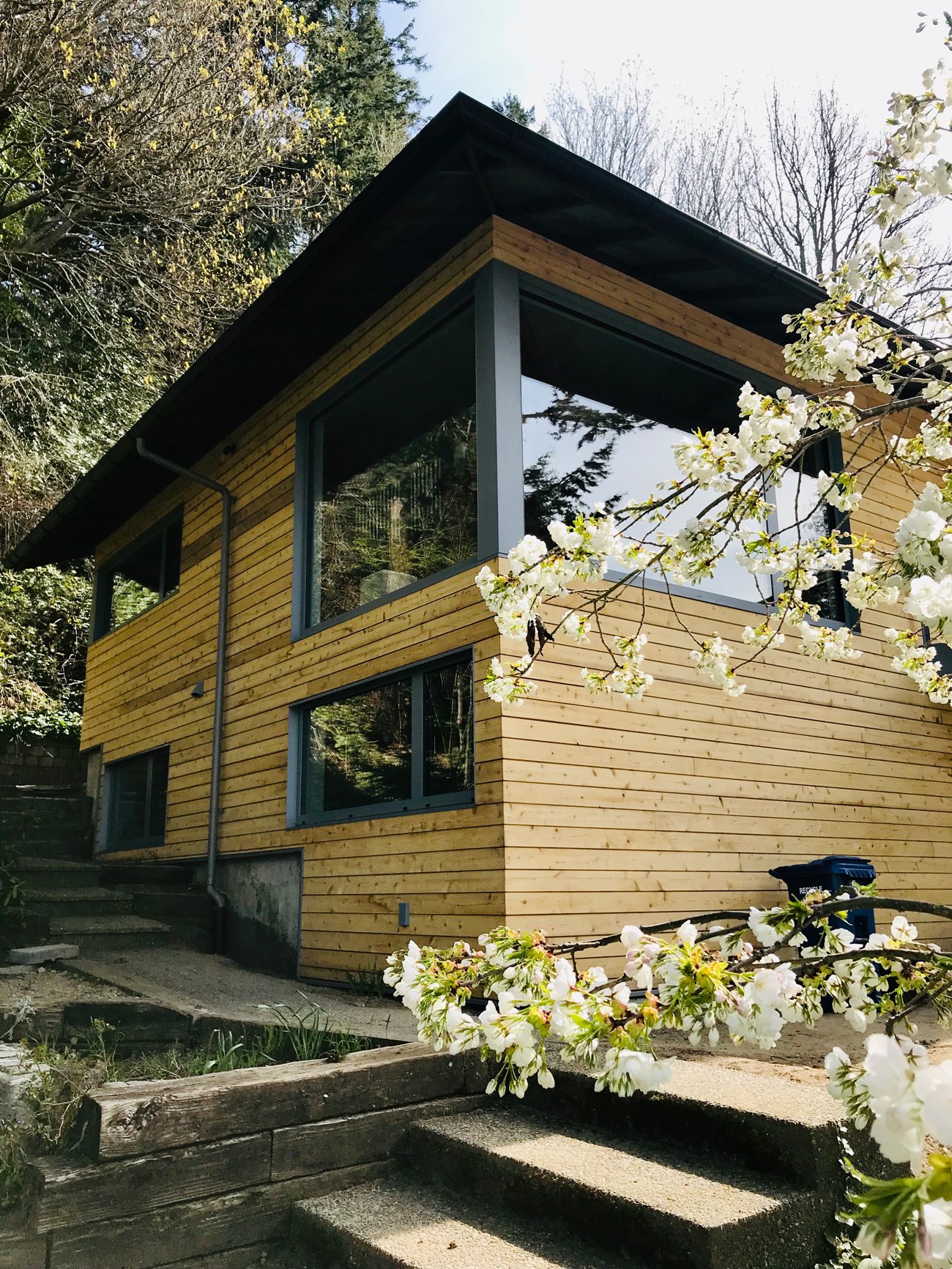
  1. sustainable home designed by SHED
    © SHED


  2. Size. Whether starting over or adding on, it’s essential to analyze needs and try to go smaller, says architect Duo Dickinson, author of Staying Put: Remodel Your House to Get the Home You Want (The Taunton Press). “Size is controllable, unlike the weather. Smarter almost always means smaller without sacrificing usefulness or delight,” he says. Hale encourages clients to keep homes under 2,500 square feet. One way to do so is by having small bedrooms, he says. Nick Rosen, who lives off the grid in a small house in Spain part of the year, stresses the importance of not overutilizing land, too. “Land is both an asset and a liability since it requires maintenance. Choose strictly what you think you will need and no more,” he says.
  3. net zero construction
    © Steffen Lehmann


  4. Embodied energy. There’s growing recognition about the importance of the term embodied energy. Steffen Lehmann, dean of the University of Nevada, Las Vegas’ School of Architecture, defines it as the amount of energy consumed by all the processes associated with the production of a building, from mining materials to processing natural resources, and the manufacture, transport, and delivery of products. “It’s important for homeowners to ask builders and architects what they will do regarding this and how they intend to keep the embodied energy low,” he says. One strategy is to use only locally sourced and processed materials that don’t need to travel around the globe, he says. Another is to keep construction simple, so assembling components doesn’t require a lot of energy. By buying from local suppliers, a homeowner is more likely to find someone who will return and fix something, Rosen says.
  5. Insulation and heating. The first step a homeowner should take before making changes to a home is to have an energy audit conducted to gauge the efficiency of the home’s systems, says architect Nathan Kipnis, founder of Kipnis Architecture + Planning in Evanston, Ill. The next steps, based on the audit, would likely be to air seal the house by caulking gaps around windows, doors, and recessed lights. Poorly insulated windows should be replaced with multipane windows. Next up should be improving wall, attic, and basement insulation, based on the R value for the homeowner’s area, Kipnis says. Any home built before 1990 should have an updated heating and cooling system, says Schmitz. Kipnis likes a geothermal ground source heat or air source heat pump, both of which are electric and help to minimize carbon from a building’s energy use. A tight home in a cold climate also should have a heat recovery ventilator to bring in fresh air to keep the home healthy, Kipnis says. A programmable smart thermostat like a Nest is useful to save more energy since it learns a homeowner’s patterns and lowers temperatures when they are away.

  6. rain garden
    © SHED


  7. Landscaping and water use. As the cost of landscaping continues to rise, homeowners are more aware that sustainable choices will survive longer and require less water and maintenance, says author and landscape designer Michael Glassman, whose eponymous firm is based in Sacramento, Calif. Native plants, permeable pavers, and drip irrigation systems all pare water use, he says. Local codes must be considered, too. Seattle, for instance, updated its stormwater code in 2016 to require stormwater to be mitigated on a property rather than immediately discharged to the street or combined sewer, Hale says. Development size and site will dictate what can and must be done. “We frequently use strategies that include green roofs, bioretention planters or rain gardens, permeable pavers and concrete, and properly graded sites,” says Glassman, co-author of The Garden Bible (Images Publishing). Besides paring water use, landscaping with large shade trees can block sunlight and lessen the need for air conditioning. Trees must be planted on the right side of the house to work, ideally the west, and far enough from homes in areas prone to fires, which some local codes now require, he says.
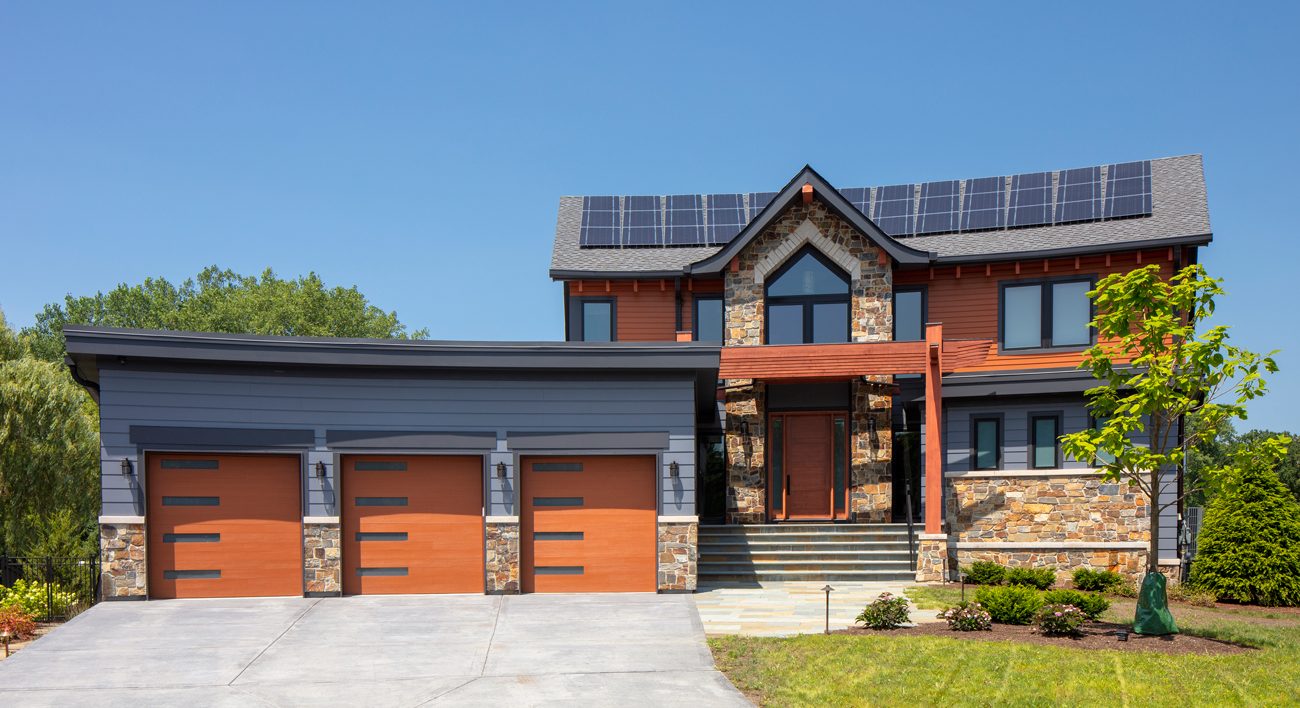
  8. large home with solar panels
    © AJ Brown / Nathan Kipnis, architect, Kipnis Architecture + Planning


  9. Solar panels. The huge decrease in cost, along with the federal solar tax credit, have made solar panels a more affordable option for many homeowners, says Kipnis. The current tax credit at 30% of the system cost will end at the close of the 2019. It goes down to 26% in 2020, 22% in 2021, and 10% credit in 2022 and beyond. The panels can be used in combination with a battery storage system to provide homeowners with a way to store energy when the sun isn’t shining and to provide backup power. The cost of battery storage is dropping significantly year over year as battery technology research is starting to pay off commercially, Kipnis says. Some caveats with solar panels: First, efficiency keeps improving, so some may become obsolete not long after installation. Second, not all buyers view them as a plus because of how they look, says Schmitz. Clients who prefer a nonsolar, traditional shingle roof—the least costly choice—should opt for light-colored shingles that retain less heat, Lehmann says.
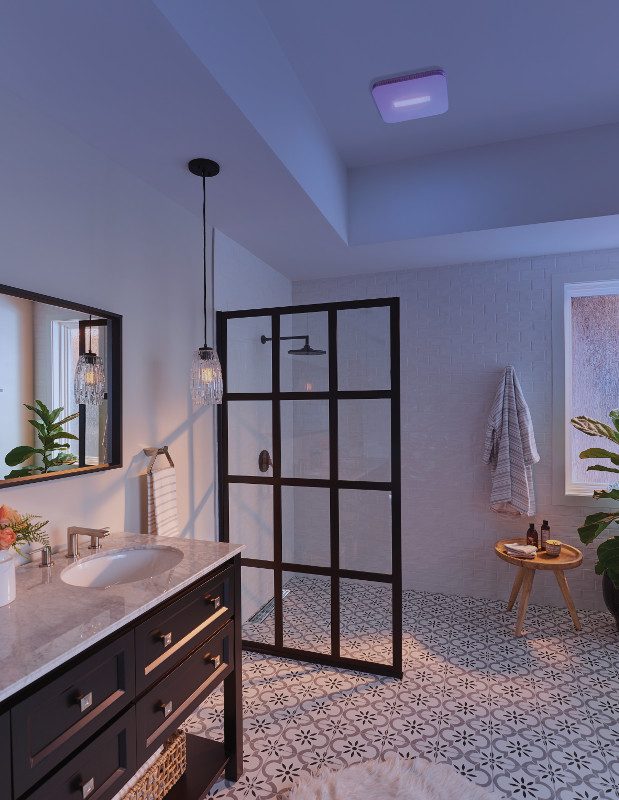
  10. germ fighting lighting from Ellumi
    © Ellumi


  11. Lights. Natural daylight is the least expensive form of light and should be maximized in new construction and renovations. But when it comes to artificial lights, LEDs are the preferred choice. Energy Star–rated products use at least 75% less energy and last 25 times longer than incandescent lighting, according to the U.S. Department of Energy. Besides saving money, the latest generation of LEDs offer other benefits. They render color more realistically than prior generations did, and can almost match incandescent light colors, especially when their measurement is at least 3,000 kelvin or higher, Kipnis says. Some LED bulbs such as Norb’s NorbSlEEP bulb can help modulate the body’s circadian rhythm so people sleep better. Others, like those manufactured by ellumi with proprietary technology from Vital Vio, stop bacteria and mold from developing, eliminating the need for chemical cleaners.
  12. Plumbing. Whether it’s a house with many bathrooms or many occupants, water figuratively and literally goes down the drain when people flush toilets, shower, wash dishes, or run the dishwasher frequently. Smart choices include low-flow toilets and showerheads, faucets with aerators, and front-loading washing machines. Schmitz likes tankless water heaters because they heat water on demand rather than continuously, but they require a gas source. Some utility companies offer rebates or incentives when homeowners buy water-saving appliances, so it’s wise for owners look for the EPA WaterSense label or Energy Star certification. Some utilities also offer smart meters and other systems so homeowners can program appliances to start at the least expensive time to use energy, according to the U.S. Department of Energy.
  13. Nontoxic, natural materials. Air quality also affects sustainability, so it’s smart to make choices that limit volatile organic compounds in paint, carpeting, and adhesives, says Schmitz. When possible, homeowners should also go for natural materials in the home, such as all-wool carpeting, quartz, and reclaimed wood.
  14. Transportation and walkability. Sustainability isn’t just about a person’s home but also what vehicles they drive and how often they use them. Charging stations have already become a hot amenity in housing, Hale says. But the more a homeowner can walk, bicycle, or take public transportation, the better, says Kipnis. Housing demand is only expected to increase in walkable areas, in both cities and suburbs, according the report Foot Traffic Ahead 2019, from the George Washington University School of Business and Smart Growth America.
  15. Recycle. Some states offer benefits to homeowners and developers who recycle construction materials during a remodel or teardown, says Kipnis. His state of Illinois is among those that have a deconstruction program in place, offering potential tax benefits associated with donation, revenue from material resale, and reduced waste management costs. There are also private companies that specialize in deconstruction and donation of building materials, such as Recyclean Inc. in Kenosha, Wis. Kipnis cautions that some materials are more recyclable than others (such as glass and metal versus concrete), and some materials are not recyclable if their materials are bound together, including certain countertops that mix aggregates, he says.

Educating the Multifamily Market

Single-family homeowners aren’t the only clients who are interested in sustainability and how to improve a property. Multifamily and commercial building owners are also considering sustainability—and many cities are insisting that the owners of buildings within their borders make improvements to decrease energy use.
For example, New York City began requiring owners of 50,000-square-foot and larger buildings to benchmark their energy use in 2012, and in 2016, broadened the requirement to include 25,000-square-foot buildings and up. This past spring, the city took it a step further by passing the Climate Mobilization Act, making it the first in the nation to put structures of more than 25,000 square feet on notice—come 2024, owners will have to pay a fine if they go over their allotted greenhouse gas emissions set for the building. The caps are determined according to occupancy classification (multifamily, retail, parking, etc.) and the buildings’ square footage for each of those areas.
“The goal for buildings of 25,000 square feet and larger is to reduce energy consumption,” says Kelly Dougherty, director of energy management at FirstService Energy, a subsidiary of FirstService Residential Property Management Company, which has an office in New York. As a result, many owners are making changes to lighting and HVAC systems and shifting to natural gas or electricity versus fossil fuels, says Dougherty, whose company manages a portfolio of 500 apartment buildings in the city, from affordable to super-luxury. She expects other cities will institute similar policies in the coming years.

Going off the Grid

While the overall goal of sustainability is lowering energy consumption and a building’s carbon footprint, some owners are going further by going off the grid completely. In fact, getting off the power grid is becoming easier for homeowners when they select systems such as solar panels with battery storage that help them to produce more energy than they use in a year. In some areas of the country, energy codes have gotten so strict that new houses or substantial remodels must get close to net-zero energy status, says architect Prentis Hale. However, it’s still not realistic for most homeowners to get off the grid completely, says architect Tony Schmitz, especially when it comes to water and sewer grids—cities usually won’t let homeowners disconnect from those due to local health codes.

Rain cistern as part of sustainable home construction
© Mark Woods for SHED


Nick Rosen, author of Off the Grid: Inside the Movement for More Spaces, Less Government, and True Independence in Modern America (Penguin Publishing), calls himself “a part-time off-gridder.” He has a home in London, but he has taken his small house on the island of Majorca in Spain off the grid completely. He’s outfitted the property with solar panels and a rain collection system. His advice for others wanting to do the same is to over provide if budget permits. “Put in a larger water tank than you think you will need, add more solar panels than are strictly necessary, and give yourself a few extra batteries,” he says. “Also, get together with other people in the area who are off-grid. No one person has all the skills and resources.”

3 Critical Steps for Homeowners Eager to Learn About Sustainability

1. Recognize that the most sustainable building is usually the one that exists (depending on condition). “Homeowners should try to reuse and improve an existing home rather than start over,” says architect Steffen Lehmann.
2. Heed those long-touted, simple conservation tips: turn off the lights, don’t let water run endlessly while brushing teeth or showering, and unplug small appliances and turn off the TV when not in use.
3. When a client is considering building new or taking on a major home renovation, advise them to hire professionals who are skilled and knowledgeable in sustainable design. “When interviewing [builders], the homeowners should ask if the person makes sustainable choices when selecting materials, systems, and construction methods,” says architect Tony Schmitz. Look at their website to see if sustainability is a focus. Just as important as what goes into a house is what builders do with waste. What goes into a landfill should be limited, says Marc Spiegel, co-founder and head of construction and demolition for Rubicon Global in Atlanta.

Tuesday, April 23, 2019

Moving Tips for Senior and People with Disabilities


Hiring movers, downsizing and processing emotions are just some of the things you’ll have to consider when helping a senior or individual with disabilities move into a new home. Fortunately, there are some resources to help make the move easier.

Moving for seniors and people with disabilities is not only physically challenging; it carries with it heavy emotions as well. Many intricacies are involved when seniors or people with disabilities relocate — whether by choice or by circumstance. In virtually every case, physical assistance will be required, either via professional movers or with the help of friends and family, among other considerations.
Downsizing, packing efficiently, and even renting a storage unit represent just a few aspects of moving for seniors and people with disabilities. If you are helping a senior or disabled person move, you’ll want to start planning as soon as possible. This guide full of moving tips will help you get started.

Make a Moving Timeline
Planning a move is a laborious process. Senior citizens may have a lifetime’s worth of items to pack for, while people with a disability may need to transfer and install vital medical equipment. Either way, it helps to have a moving checklist to keep you on track throughout the relocation.
Since the moving process will likely take longer for the elderly and/or people with disabilities, you should begin planning a move as early as possible. Some tips for moving with the elderly and disabled include:
·         Establishing a timeline.
·         Setting a budget.
·         Researching moving companies.
·         Enlisting friends and family for help.
·         Downsizing.
·         Packing.
·         Mentally preparing for a change.
·         Scheduling utilities and things they’ll need in their new home.
No matter who is involved, a moving checklist helps break a monumental undertaking into small, manageable chunks.
Downsizing
Downsizing is almost always necessary when moving elderly parents into an assisted living facility or nursing home. However, culling down the many items a senior has collected over the years is no small chore. Often, these items carry sentimental value and can be difficult to part with. Downsizing can be hard for a senior for several other reasons as well, but, with the right approach, the entire process can be made less stressful. 
Marie Kondo, a tidying expert, and her KonMari Method have become wildly successful. This is because she asks the right questions to help mentally prepare people to keep or discard their personal belongings. Having a process like the KonMari Method can help your senior to downsize. Ask them a couple of simple questions, such as does this item bring you joy?
Analyzing items a person may be hanging onto in this way — clothes, furniture, sentimental objects, and more — can help someone better decide whether to keep them or not. Downsizing in this way can become much less emotionally taxing on a person when there’s a clear end goal. 
Nursing Homes and Assisted Living
Making the emotional transition of moving into an assisted living facility can be trying. But you can take certain steps to help ease this transition and make their new living situation feel more like home.
Loved ones and friends can help facilitate this transition by:
·         Helping with packing and moving.
·         Staying positive and providing support.
·         Calling and visiting often.
If not adequately prepared, loved ones and friends can also hinder this process. It may help to investigate the dos and don’ts of moving a senior into assisted care.


Packing Tips
A moving checklist, timeline, and downsizing efforts all pave the way toward the most crucial element of moving — packing. This will require special consideration concerning physical limitations, packing efficiently, and the probability of asking for or hiring help.
Get Packing Boxes
For everyone involved in the moving process, packing boxes in the correct way is crucial to minimize the risk of injury and, overall, to make the moving process easier. When packing boxes, it is best to err on the side of packing them lightly. This way, most anyone can pick up and transport these boxes safely. Even if it is the case that you have thicker, sturdier boxes, overloading them is likely to make things more difficult, rather than easy.
Boxes should always be labeled appropriately, not only to identify the possessions inside, but to determine items that will be needed immediately, in the near future, and at a later date. Being able to locate your items will make it easier to keep track of what you need and will make the unpacking simpler. For example, things that will be needed immediately can be packed last on the moving truck to be the first out at the new location.
Consider Using Storage Solutions
For items not needed immediately, articles that won’t fit in a smaller living space or items that a person just can’t let go of, storage may help. Assisted living facilities may provide services that will make it unnecessary to bring specific personal components, as they are offered on location. Other facilities may have more or less opportunity to bring along personal items. Fortunately, storage units come in many sizes and offer solutions to accommodate any amount of items.
For those who would rather their sacred belongings be close by — where they can have the peace of mind of knowing exactly where their items will be, and that they’ll be safe — storage units come with security features. Storage units provide an alternative to giving away or discarding personal possessions, with the added bonus of safety and security.
Hiring Movers
There may be instances when the friends and family of seniors and/or people with disabilities cannot assist in the move. Perhaps there isn’t enough time to get everything done before moving day. Moving services are available expressly to help seniors and others in need when moving.
For example, the National Association of Senior Move Managers (NASMM) can provide assistance. NASMM and specializes in helping seniors with the logistics of moving and downsizing. Those with disabilities can find moving services designed specially to help them with tasks such as lifting or transporting boxes. Many of these services are available at the local or national level.
Financial Assitance
Moving can take a financial toll on anyone, and seniors or people with disabilities are no different. Several organizations are making financial assistance available for those who will need help during their move. They may even shoulder some of the cost it will help to hire movers. If the cost of moving will be a concern, contact one of the following agencies:
·         Administration For Community Living (ACL): The ACL works with state and local governments. The organization has awarded more than one billion dollars in discretionary and mandatory grants to support services for seniors and people with disabilities.
·         ADAPT: This national grassroots organization is dedicated to the promotion of civil and human rights for people with disabilities.
·         Association of University Centers On Disabilities (AUCD): The AUCD provides services
Moving Day Advice
Moving day may be yet another stressful day for seniors and people with disabilities. Seniors may find it hard to move out of a place that they’ve called home for so many years. T, while those with disabilities might struggle with what they are physically capable of in their new location. Both groups may be frustrated by not having some of the things they had in their old homes. 
During this time, it is important to remember that not everything has to be done right away. This emotional adjustment period, coupled with a significant change in living conditions, will take some getting used to. Stay positive and remember that this move is for the best. While this will be a significant transition, some measures can be taken to help lessen the emotional impact.
Pack an Overnight Bag
It is helpful during the packing phase to pack an overnight bag. An overnight bag will ensure that every item needed immediately is present and accounted for. It may also be nice not to have to dig through boxes at the end of the already long day. Clothes, toiletries, medication, medical equipment and charging cords on hand will allow for a comfortable night and next morning.
Keep Track of Essentials
To help keep comfort levels up, maintain a regular routine, and prepare for the next day and week, essential items should be tracked down and unpacked early. Seniors and those with disabilities can set themselves up to be ready for the immediate future. They, and will feel better about the move if they know where the plates and silverware are when they want to eat, or where pillows and fresh sheets are when they want to get some sleep.
Medical equipment and disability aids should be either in the overnight bag, in the back of the moving truck, or in the car for immediate access. Someone in their 30’s without disabilities might do just fine after forgetting these essentials — however, seniors and people with disabilities might find themselves very uncomfortable, or even at the serious risk of exacerbating a medical condition.
Recognize and Mitigate Hazards
Not every box is going to be unpacked and out of the house on the first day. In fact, there may be several boxes in every room for quite some time, as it will take seniors and the disabled more time to sort out these boxes. The packing and unpacking process will be slow-going. To keep this process smooth, and to minimize the possibility of injury, it will help to understand and diminish the hazards that may materialize during the unpacking phase.
Packing and unpacking slowly will help alleviate and prevent physical exhaustion. Additionally, keeping clear paths through every room of the house can help reduce tripping hazards or wheelchair/walker obstructions. While this may not be something that most people will naturally think of, it is a critical consideration for seniors and the disabled.

Be Ready to Deal with Emotions
It may very well be the case that a move for a senior or person with a disability is done out of necessity, not by choice. It is not hard to imagine that negative emotions might surface when a person cannot take care of themselves anymore.
Seniors, disabled persons, and their loved ones can all do their part in helping to turn these feelings around. Make sure the person you’re caring for gets a fair amount of control over as many aspects of the move as is reasonable. This can help them maintain a sense of autonomy. Additionally, engage in regular talks about current feelings and fears of what may be to come. Help them begin to maintain a daily routine and become active in the new community. These steps can help a senior or person with disabilities gain some closure and can help alleviate feelings of loneliness while prompting them to be positive and look forward to their new life.
Create Jobs That Involve Everyone
To further facilitate feelings of independence and companionship, loved ones should include seniors and disabled persons in the moving process. To show that they have some say over everything that is happening, involve them in the planning process. If they can lift boxes or other moving duties, ask them to do so. If they can’t perform any lifting, have them sit and break down boxes to be recycled or other light tasks. Anything you can do to reinstate their feeling of autonomy can do wonders for their outlook.
Organizing in the New Space
In most moves, organizing the new living space may seem like the easiest, most fun part. However, for seniors and people with disabilities, organizing a new home can be a difficult. Disability accommodations and equipment will have to be strategically placed, and hazards will need to be mitigated. 
Considering where to put these things can be difficult for those going through this emotional time, and they may feel overwhelmed. While most people who are in the act of moving may spend some time determining where to put the living room houseplant, while those with disability and/or seniors will have to consider the more severe implications of placing medical equipment in the wrong place.
With the right information, you can help a loved one through this trying process. The more that you and your loved ones plan and prepare, the less stressful the move will be for everyone, allowing for more time spent enjoying the company of family, as opposed to moving their belongings.


Toby Parks, SRES
Realtor  Coldwell Banker Residential Brokerage
520-310-0122